Tuesday, September 17, 2013

The Winds of Change


A long time cerrado visitor, who annually visits here, came "home" in the middle of Monday night.  She has been visiting the cerrado for millennia.  Her name?  Chuva.  Rain.  For the past 2 days, I’ve noticed the clouds have been building up late in the day.  The large raindrops awakened me soon after falling asleep.

As I sat in my room with the windows open on Tuesday morning, it was apparent that the sounds of the city had changed.  While winter comes to close on the cerrado and spring begins, I noticed the rains have awakened the bird life.   In the prior 10 days, there was a random bird song / call from the English sparrow, bem-te-vie, swifts, swallows, and local parrots.  (NOTE: Bem-te-vie (pronounced bem – chay – vie’) is a fairly common bird in the city.  Its name sounds like its call.  Last week, Itamar told me that bem-te-vie literally means “I saw you well.”)  As is the case with other bird life when nesting season is imminent, bird activity increases.  (For the 1st ten days of my assignment, the weather has been hot and dry, with a lot of sun.  Given the cerrado’s dryness, it’s not uncommon for me to drink 3 liters of water per day)

Today, Toni (Ipe’s president) picked us up in the morning because Aline had a final exam.   When we arrived at Ipe, fellow IBMers Christy & Anna (and CSC participants) were already there to meet with Toni.  They are working at Acao Moradia, which is also an NGO.  (One of Acao Moradia’s missions is to train families in the production of ecological bricks for low-income houses.)  Currently, Acao is experiencing an 8% - 10% breakage before the bricks have completely dried.  It takes about 28 days for a full pallet of bricks to dry in the cerrado heat.  The breakage problem is partially due to the fact that Acao’s pallets are not properly designed for carrying such a heavy load.  
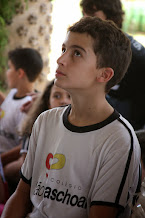
           Photo     Photo

Toni and Ipe are well known in the community and he was glad to help.  He talked with Senor Oscar (from Acao), the 2 interns (Fernanda & Elissangel), and the IBMers.  Given Toni’s experience, knowledge of pallets, and willingness to assist another NGO, the 90 minute meeting was a huge success.  Among other things, Toni suggested that one of his workers at Ipe could build a prototype pallet (that meets Acao’s needs).  Once Acao is confident the design will work, then Toni will send his worker to Acao to show them how to make a stronger pallet.
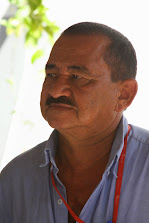
    Photo  Photo  Photo

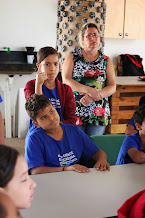
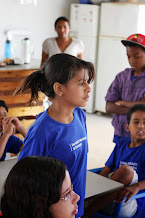
Another group of older students (from Sao Paschoall) came to visit Ipe while Toni was finishing his consultation with Acao.  As with the prior school visits, you hear the students’ excitement well before you actually see them.  Toni personally spent a lot of time with these middle school aged kids and talked to them in depth about sustainability, composting, solar power, and protecting / giving back to the environment.   

Mid afternoon, Luchino forewarned me of an impending rain storm.  He told me that if I didn’t quickly head back to the hotel, I may be either caught at Ipe for an extended period or prevented from crossing the Avenida Gov. Rondon Pacheco (which is where the San Diego Hotel is located) because of localized flooding.  By the time Itamar dropped me off at the hotel, the winds had picked up to 20+ mph, the clouds were getting darker, and rain was imminent. 
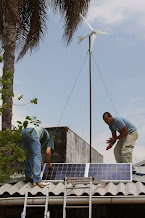
      Photo  Photo

The heavy rains started just as I was setting up my laptop, in my room, to continue working on our deliverables.

#ibmcsc brazil

Instituto Ipe Cultural & IBM's CSC: A Strong Partnership


Having been in Uberlandia for 6 business days, I want to get back to basics for just one blog post.  Some of you may be asking, “Why is IBM in Uberlandia?  What does the CSC program do for Ipê?”  A majority of this blog will give you insight into CSC Brazil 14’s mission at the local level. 

 Photo Photo

Fifteen IBMers have come from 11 different countries to tackle some pressing problems experienced by the city government (a.k.a. the municipality) and local NGOs (non-governmental organizations).  We have been broken into 7 teams working with 6 different clients.

What is my team doing at the Instituto Ipê Cultural?  Here is what Hazira and I have been challenged to complete during our month:

Project Title: Enhanced organizational structure and HR procedures
Activities to Attain Objectives:
1.    1.)  Hold initial meeting with Ipê Institute’s management team to review scope of work, understand mutual expectations, and determine assignment action plan;
2.    2.)  Revise scope of work within one week based on current situation;
3.  3.) Develop greater in-depth understanding of the organization’s programs and projects as well as understanding of the organization’s statute, goals and objectives;
4.    4.) Develop understanding of the organization’s HR processes through interviews with staff and clients;
5.  5.) Set up interviews and evaluations with staff, volunteers, and consultants in coordination with the management team;
6.    6.) Design HR processes;
7.    7.) Design customized HR tools;
8.    8.) Propose an organizational structure; 
9.    9.) Train staff on how to implement new strategy and/or tools;
1   10.) Provide regularly updated briefings with organization’s management and/or working group on assignment progress, including final summary presentation on assignment results and recommended next
Deliverables of the Assignment
1.       => A revised scope of work, if necessary, after one week based on the current situation and discussions with organization’s management;
2.       => Organizational Organogram, HR manual with tools, and HR policy;
3.       => A final presentation to management working group outlining the team’s key deliverables and solutions;
4.       => Action plan of next steps for implementing the project.

To date, we have completed 12 out of 13 interviews with key Ipê staff and volunteers.  By week’s end, we plan on having a deliverable for each person outlining a Job Description, Roles & Responsibilities, and Skills required to perform the job. We're getting closer.

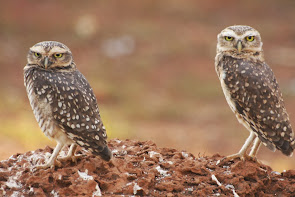
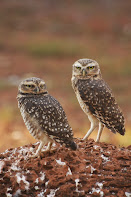
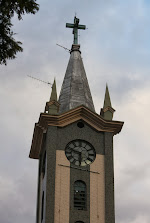
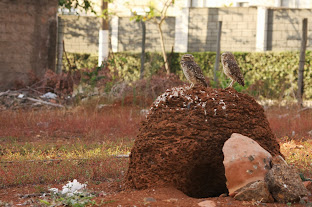
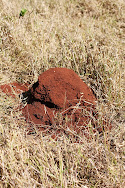
At the end of the day, I had planned to walk to a local park.  The park is directly adjacent to a well-known church.  I had hoped to photograph the ipê tree, as well as some Brazilian marmosets (small monkeys) living in a nearby tree.  Itamar, Camila, and Daniella surprised me by offering to take me to an abandoned lot, in a far corner of town, to see a pair of burrowing owls, also know as coruja (co – rue’ – juh).  After some intense searching and a question or two to a local business owner (whose business was only 2 blocks away from the owls), we arrived.  The owls must have known we were on our way because the male & female were both sitting on a termite mound, which sits on top of their burrow, waiting to greet us.  Local neighbors told us that there are owlets in the burrow, but we weren't fortunate enough to see them.  What a wonderful surprise and for me, a perfect way to the end my day. After a 20 - 25 minute walk back to the hotel, it was time to prepare for the day's next meeting.

Photo Photo

At the end of the night, Larissa & Bruno (our program consultants) met with the extended team from 8PM – 10:15PM.  It had been a long day.  At 12:15 AM (Tuesday), I was very glad to shut down and let my head hit my pillow.  

Photo Photo

#ibmcsc brazil

Sunday, September 15, 2013

An Ecotourism Adventure to Remember


By early Saturday afternoon, Larissa already had about 10 people signed up to venture out into the cerrado, hike to one of the scores of waterfalls in Minas Gerais, and rappel from the top of the falls to bottom.  With regards to my decision to go, vacillation was the word of the day.  One part of me wanted to go and experience the rawness and dryness of the cerrado (this is the driest time of the year in Minas), while another part of me wanted to see the ultimate: Parque Nacional Serra da Canastra.  (This national park is the nearest to Uberlandia.)  After a Skype chat with my wife and daughter (and some gentle encouragement), I opted to go.  As it turns out, it was the best 330 reais (about $150 US) I could have ever spent. 

On Saturday night, Uberlandia was rockin’.  I retired early (10:30PM BST) because we had a big day ahead of us.  For the next 2 hours, cars, music, people, and the sounds of the city kept me from falling into a deep sleep.  Finally about 12:30AM, I think I finally dozed off.

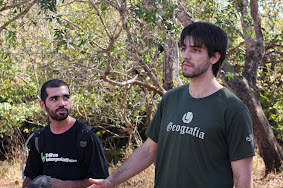
Sunday, 9/15, the bus arrived at the hotel at about 8:00AM and by 8:35 we were off.  Our guides were owners of a local ecotourism company named Trilhas Interpretativas.  The falls were about 50 km away, and it took us about an hour to get there.  Surprisingly, we just parked on the side of the road and walked across the highway to a gate; which was locked unfortunately.  (Edouardo mentioned the land owner just forgot to open the gate, but they did get permission.)  All 12 of us ambled over the gate and we were on our way!

When the cattle heard our voices, a herd of about 15 – 20 came running up the hill to see what was causing all the commotion.  (And quite possibly, they wanted to see if we had some feed or hay for them to eat.)  We sent them off by raising our voices and clapping our hands.  That excitement paled in comparison to what was yet to come.

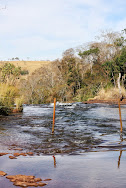
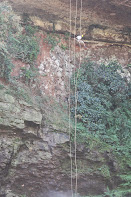
A brief 20 minute walk got us to the place where the stream hurtled over the cliff and dropped about 60 meters to the large pool below.  Some of the Trilhas team led us to the base of the falls, while the rest of the Trilhas team stayed at the top and set up the rappelling ropes.  Prior to arriving at the falls, we could hear the thunderous roar of the water as it pounded the rocks and pool below.  All CSC members quickly decided to take a dip.  The water was cold, but refreshing.  Thiry minutes later our time was up.  The guides asked us to get all our backpacks together so we could make the trek back up to the top of the falls.

Photo  Photo

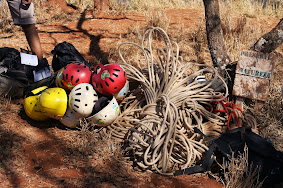
Douglas, Edouardo, and the other 3 members of their team gave us serious instructions on what / what not to do when rappelling.  In about 20 minutes, we had our helmets on and our harnesses in position.  Everyone had also practiced the techniques they taught us while tethered to a tree.  Douglas conveyed last minute detailed instructions in Portuguese and Edouardo translated them.  

Photo  Photo

I volunteered to be the first person.   Interestingly (to me anyway), I was very calm.  The Trilhas team has rappelled hundreds (if not thousands) of times, and the CSC members all had confidence in them.  The 1st steps and minutes are the most challenging.  To get over the side, you had to duck under a tree limb, spread your feet wider than your shoulders, and slowly take baby steps down the cliff face.  What Edouardo & Douglas didn’t tell us?!?!  The wall only went for about 15 – 20 feet.  After that, you were dangling in the air like a spider floating on his gossamer web.  The left hand really doesn’t do anything when rappelling.  It is the right hand that is positioned in the right hand side of your lower back (at the belt line) feeding the rope as you make your way down.  (Our 2 rules that should never, never be broken:  (1.) Don’t put your left hand near the rappel device.  (See NOTE: below.)  (2.) Don’t remove your right hand from the small of your back.)

Everyone else took their turn, while those that had completed the rappel waited at the bottom of the falls craning their necks to see who was next.  With the cool mist and the strong wind, it was actually chilly down near the base of the falls. 

A full day of ecotourism builds up an appetite.  On the way back to Uberlandia, the entire team and the guides stopped at a traditional “fogoes” (stoves) eatery.  

 Photo  Photo

For the next 3 weeks, the IBM CSC Team will be heads down working to create and share deliverables with our respective NGOs.  There is a chance that this might be our only excursion opportunity because the remaining 2 weekends will be chocked full of work being done on behalf of our assigned NGOs.  If it is our last opportunity to venture out into the cerrado and Minas Gerais, the memories of seeing the falls, swimming in the spring fed pool, and rappelling down a drop of 190 feet will stay with me for the rest of my life. 

NOTE:  The "rappel device" is a key component of rappelling.  It is a metal device that is attached to the harness.  The climbing rope is threaded through the device and through a locking carabener on the harness, allowing the climber to make a controlled sliding descent, a rappel, down the rope.

Tapas Brasileiras Quatro (#4):

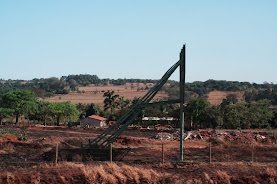
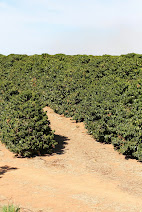
=> While driving to our destination, it was obvious to me that the cerrado is being seriously threatened by coffee plantations, cattle ranching (although this is more innocuous compared to the other threats), development & sprawl, other crops (e.g., soybeans), and habitat fragmentation.  Itamar shared these threats with me during our first week at the Ipe, but this was a chance for me to see it first hand.  Many large mammals and predators of this ecosystem are threatened or endangered.  

  Photo Photo
 Photo  Photo Photo
 
#ibmcsc brazil

Saturday, September 14, 2013

It's "Sábado", and Off We Go (In All Directions)


Saturday would be a day for me to reflect on the week’s accomplishments, plan for next week’s CSC activities, get caught up on some life maintenance activities, e.g., run errands, drop of laundry, & sleep in (until 7:30AM BST), go to the Banco do Brazil ATMs to withdraw some reais (Brazilian currency), and prepare for Sunday’s activity.

The hotel has shorter breakfast hours on the weekend, so I opted to head down a bit earlier.  On the way, I ran into Jill (an IBMer from Ireland) on the elevator.  Our conversation quickly turned to last night’s event.  Jill and I both agreed it was a memorable get-together.  Mike, an IBMer from New Zealand, was the lone person in the breakfast area, so we had the whole place to ourselves for about 30 minutes.  

 Photo  Photo

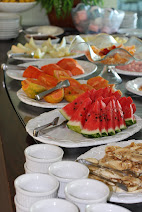
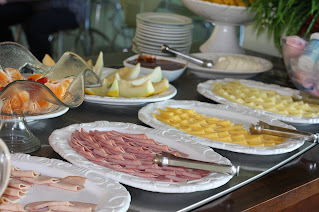
The hotel has quite a variety of fresh fruits, sucos (fresh fruit juices), meats, grains, and scrambled eggs.  As we talked, other IBMers (Michael, from Germany, Olaf, from the Netherlands, Cecilia, from China, & Anna from Poland) joined us at our table and joined in the conversation.  Today, the IBM CSC Team would be going in several different directions: some went to Uberlandia’s Mercado Municipal, some slept in, others just chilled out, while others were heading over to Club Cajuba for the afternoon.


Tomorrow involves a hike to some local waterfalls.  Uberlandia, even in the dry season, is a land of water.  (Itamar has told me on several occasions that Uberlandia, as well as the rest of Minas Gerais, sits on top of the largest aquifer in the world.)  Larissa (our local program consultant) worked with a local eco-tourism company to coordinate a hike to 2 different waterfalls; as well as rappelling down the face of the drop off next to one of the falls.

To be continued… I hope you are enjoying my blog and plan to continue sharing the "journey" by reading my posts & looking at my pictures.   Boa noite.  (Good night.)


”Tapas” Brasileiras Número Três (#3):


=> The purpose of this "tapas" is to share some more details about our interns.  Alene & Lumia split the day into two segments:  Alene assists us in the morning and Lumia in the afternoon.  They attend a local university in Uberlandia.  For being such young women, they already have a mature, global perspective on the world.  This week, I’ve had several personal, in-depth conversations with both of them.  They have impressed me with what they have already accomplished. 

Lumia teaches 4 English classes every week; 2 each on Tuesday & Thursday afternoons.  She has traveled to many different countries.  She easily translates from English -> Portuguese, and vice versa, and she comfortably interacts with each member of the CSC team.  International Relations is her major focus of study at the university.  From my view, she is well on her way to achieving success.

Alene exhibits very similar traits.  When I challenged her to a difficult question, (i.e., How do Brazilians in your generation view the U.S.?), she proceeded to quickly & confidently give me a 3 – 4 minute answer that I knew came from the heart.  It was definitely unrehearsed.  Alene presented a view I would have expected to come from someone much older than she.  As I got to know her better, I found out she studies full-time, she assists her mother & father at their restaurant, and has traveled abroad. International Relations is also her major area of study at the university.  

In my opinion, both interns are well on their way to accomplishing great things.  As the saying goes, “The world is their oyster."

       Photo

#ibmcsc brazil

Final Work Day…..… Of Week 1


Today was my primeira sexta-feira em Uberlandia.  (“primeira sexta-feira em Uberlandia” translates to “1st Friday in Uberlandia”.)  The day started pretty much the same way as the prior 3 days.  We were picked up at the hoteis (hotel) at 8:45AM BST by Alene, 1 of 2 university interns who is assisting us during our assignment.  (Lumia is the other intern.)  Alene adeptly navigated through the early morning rush hour traffic (which is pretty tame by Tampa standards), and we arrived at the Ipe Institute around 9AM.  When we arrived, a large group of students were already assembled in Ipe’s front patio and were being taught by Guilherme’.  Everyone in the group was listening intently to Guilherme’s educational messages.  Once his talk was complete, the students proceeded on to Ipe’s hands-on displays & exhibits, in the main courtyard, which extends the entire length of Ipe’s main building.  

For the rest of the morning and through early afternoon, Hajira & I continued to conduct more interviews.  At the beginning of the week, twelve Ipe staff members required an interview.  By week’s end, there were only 3 more to go. 

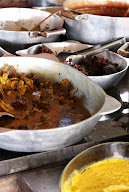
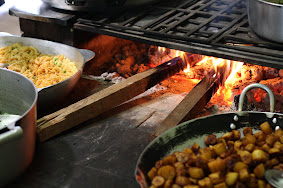
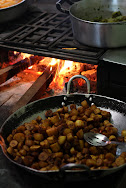
Since this was our fifth lunch time at Ipe, it required – what else – a trip to a 5th different restaurant!  At this restaurant, you pay a flat fee and eat as much as you want (or can).  There were a wide variety of fresh / cooked vegetables, meats, and greens to choose from.  This was a traditional fogoes (stoves) eatery.  In the back of the restaurant, there were 2 huge stoves which held massive pots containing beans, vegetables, and meat main dishes.  Several large logs were continually burned to keep the large pots hot.

Photo    Photo

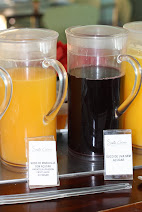
The afternoon was fairly quiet because Toni and his staff busily prepared for a large contingent of guests.  Earlier in the week, Toni, Ipe’s president, extended an offer to the entire CSC Team, as well as supporters of Ipe, to come to the Ipe Institute to see his facility, enjoy the beautiful cerrado night, and partake in some local bebidas (drinks) known as sucos and caipirinhas.   There were 3 types of sucos (fresh fruit drinks) served during the event: pineapple juice blended with crushed mint, fresh passion fruit, and fresh strawberry juice.  (Sucos are a staple at every Brazilian meal.)  Caipirinhas (pronounced kie-purr-REEN-yah) are made from lime & cachaca (a Brazilian cane brandy).  Typically, they are only lightly sweetened.  This national drink of Brazil tastes a bit like a mojito without the mint.

  Photo         Photo

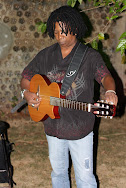
A local Brazilian guitarist & singer (know as Djavan) played for about 2 hours.  His sound captured the spirit and feeling of Brazil.  What a splendid way to end the week!

Photo  Photo


Tapas Brasileiras número dois


=>  Caipirinha (pronounced kie-purr-REEN-yah) roughly translates to "country bumpkin". It is made with cachaça, an intensely sweet Brazillian style of rum made from sugarcane juice. The Caipirinha is the national drink of Brazil, where it originated.


#ibmcsc brazil
Thursday, September 12, 2013

“Brazilian Flow”


Last Saturday, on our first day in Uberlandia, all CSC participants were told to just “go with the Brazilian flow”.  At the time, none of us truly knew what this meant.  Some of us ventured a guess, but until we had 3 – 4 project days under our belts, it wasn’t easy to put it into perspective.  
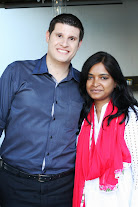
Photo  Photo  Photo   

Now that I have been here a week and I have been working at the Ipe Institute for 4 days, the term means something to me.   I get it.  Uberlandia, as well as Brazil, has a rhythm, a cadence, and a flow all of its own.   Every Brazilian I’ve met has a wonderful zest for life.  Going with the “Brazilian flow” means that one should accept things as they come.  If a meeting is scheduled to start at 9, but it doesn’t start until 9:20, just accept it and do something equally as meaningful with the time.  Start a conversation with a Brazilian on your team and get to know him or her better.  Share cultures.  Practice your Portuguese.  Take time to more closely observe the city and feel its pulse.   
Photo     Photo

Today (Thursday, 9/12) was another productive and exceptional day at the Ipe.  The day began the same way as the prior 2 days.  School children came to the Ipe to be educated about recycling and how to better protect  & take care of the planet.  Toni believes that if you teach our young people, they hold the future in their hands and the planet will be a better place.  

Photo   Photo

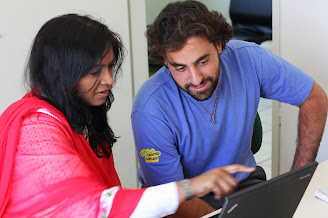
Hajira and I interviewed Itamar, Ruthe’, Guilherme’, Ana, and Toni, Ipe’s president.  Throughout these interviews, we learned significantly more about how Ipe deeply touches the lives of its staff, local school children, and the city of Uberlandia.  Not only did we extract insightful information about each person’s role at Ipe, but we also got to know each individual on a personal level.  Our post-interview discussions revolved around family, music, and aspirations.  The interviewee gained information about me and Hajira as well.  One sentiment was expressed by everyone: They have a deep seated passion for and belief in Ipe.  They are all there because they believe in Ipe’s mission and its 5 pillars.  Toni has done an exceptional job of instilling his vision in everyone on Ipe’s staff.   

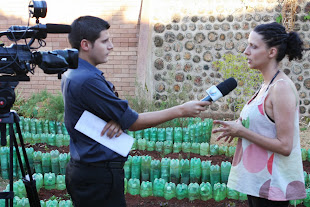
At the end of the day, a local newsman and his camera man came by to do a story on Ipe.  The CSC team was interviewed making this the 2nd time in less than a week that IBM’s CSC program made the local TV news. 

 Photo   Photo

 Photo   Photo

#ibmcsc brazil